Design-Led Innovation and Triple-Helix Collaboration for MSME Product Development: The PROPEL Project in Bohol, Philippines
DOI:
https://doi.org/10.46604/aiti.2026.15898Keywords:
triple helix, design-led innovation, prototyping, rural innovation systemsAbstract
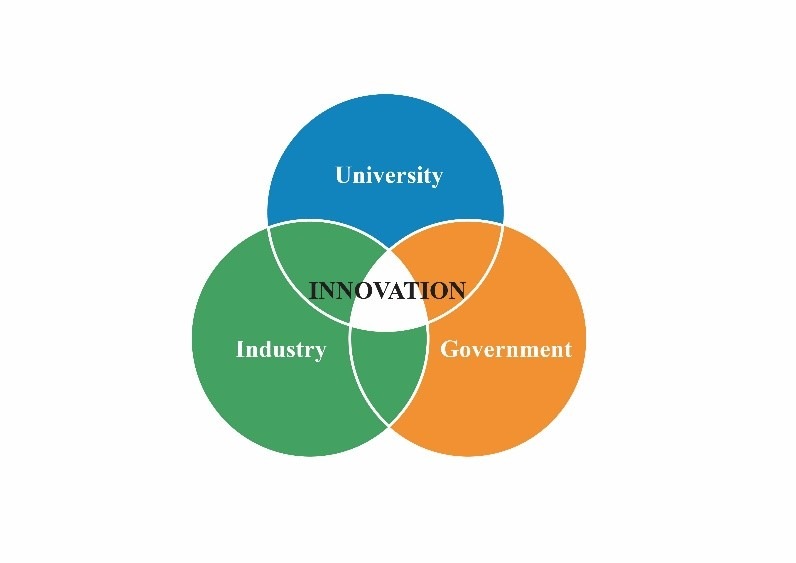
This study aims to examine design-led pedagogy as a mechanism for knowledge and technology transfer within a triple helix collaboration supporting product development among micro, small, and medium enterprises (MSMEs) in a resource-constrained rural setting. Using a qualitative case study of the PROPEL Project in Bohol, Philippines, it analyzes how collaboration mechanisms, design-led processes, and boundary conditions shape product outcomes. The findings show that innovation outputs depend not only on institutional alignment but also on enacted coordination, iterative prototyping, mentoring, and feasibility-based refinement among university, government, and MSME actors. The decline from 148 approved concepts to 58 exhibited prototypes reveals selective translation under time, material, and organizational constraints. Prototype realization is influenced by mentorship intensity, coordination quality, and MSME absorptive capacity. The study refines the triple helix interpretation by clarifying design-led pedagogy as a transfer pathway and identifying boundary conditions that shape the visibility of innovation outputs in rural innovation ecosystems.
References
M. V. Capiña, “Impact of Management Practices on Micro and Small Enterprise (MSEs) Performance in Marinduque, Philippines,” Journal of Social Entrepreneurship Theory and Practice, vol. 1, no. 1, pp. 84-97, 2021.
K. L. Armas, C. Dela Cruz, J. E. Navarro, and V. Viloria, “Triple Helix for Sustainable Development Goals: An Impact Assessment of Shared Service Facility for Micro, Small, and Medium Enterprises Competitiveness in the Philippines,” International Review of Management and Marketing, vol. 14, no. 3, pp. 65-73, 2024.
E. Tereshchenko, E. Salmela, E. Melkko, S. K. Phang, and A. Happonen, “Emerging Best Strategies and Capabilities for University–Industry Cooperation: Opportunities for MSMEs and Universities to Improve Collaboration. A Literature Review 2000–2023,” Journal of Innovation and Entrepreneurship, vol. 13, no. 1, article no. 28, 2024.
A. T. Hailu, “The Role of University–Industry Linkages in Promoting Technology Transfer: Implementation of Triple Helix Model Relations,” Journal of Innovation and Entrepreneurship, vol. 13, article no. 25, 2024.
B. Petri and D. Breslau, “Triple Helix Relations in Local and International Scientific Collaborations: A Case Study of Thailand, the US and China,” Journal of Scientometric Research, vol. 13, no. 3, pp. 773-790, 2024.
H. Etzkowitz and L. Leydesdorff, “The Dynamics of Innovation: From National Systems and ‘Mode 2’ to a Triple Helix of University–Industry–Government Relations,” Research Policy, vol. 29, no. 2, pp. 109-123, 2000.
H. Etzkowitz, “Innovation in Innovation: The Triple Helix of University-Industry-Government Relations,” Social Science Information, vol. 42, no. 3, pp. 293-337, 2003.
Y. Cai and H. Etzkowitz, “Theorizing the Triple Helix Model: Past, Present, and Future,” Triple Helix Journal, vol. 7, no. 2-3, pp. 189-226, 2020.
O. Kalenov and E. Shavina, “The Role of ‘Triple Helix’ Innovative Model in Regional Sustainable Development,” Proceedings of IIIrd Int. Innovative Mining Symposium, E3S Web of Conferences, vol. 41, article no. 04054, 2018.
J. P. C. Marques and N. Vorontsova, “Triple Helix Interactions in a Rural Context: The Case Study of a Regional Business Incubator,” International Journal of Technology Management and Sustainable Development, vol. 21, no. 3, pp. 287-305, 2022.
F. Demir, I. Saur-Amaral, and D. F. Polónia, “Enabling Innovation Capabilities: A Design Thinking Toolbox for SME Strategic Transformation,” Administrative Sciences, vol. 15, no. 10, article no. 384, 2025.
J. E. Olivares Ugarte and L. Bengtsson, “Central Characteristics and Critical Success Factors of Design Thinking for Product Development in Industrial SMEs—A Bibliometric Analysis,” Businesses, vol. 4, no. 4, pp. 843-864, 2024.
L. D. Hollebeek, V. Kumar, R. K. Srivastava, W. M. Lim, and S. Urbonavicius, “Guidelines for Theory Selection: The IMPACT Framework,” Psychology & Marketing, vol. 42, no. 11, pp. 2789-2806, 2025.
W. M. Lim, “Theory and Theory Development: Guidelines for Establishing Theoretical Gaps, Foundations, Contributions, and Implications,” Journal of Business Research, vol. 202, article no. 115745, 2026.
P. Humbeck, K. Pfähler, M. Wiedenmann, and G. Herzwurm, “The Impact of Servitization and Digital Transformation—A Conceptual Extension of the IPOO-Framework,” Procedia CIRP, vol. 81, pp. 914-919, 2019.
S. Z. Nayem, M. Khatun, and M. S. Hossain “An Investigation of the Mechanisms of Technology Transfer and Automation in Universities: A Case Study on Fostering Entrepreneurship and Startup Ecosystems at Bangladesh Open University,” American Journal of Education and Technology, vol. 3, no. 2, pp. 52-69, 2024.
Y. Yanto and W. Warsid, “Empowering Indonesian MSMEs: An Examination of the Pivotal Role of Universities,” International Journal of Innovative Science and Research Technology, vol. 8, no. 8, pp. 1637-1642, 2023.
N. S. Rosli, S. A. Kadir, R. Jamaluddin, and E. K. M. S. Kang, “Discovering the Impacts of Implementing Digital Entrepreneurship Education in Business Incubation Program at Malaysian Polytechnics,” International Journal of Academic Research in Business and Social Sciences, vol. 14, no. 12, pp. 3729-3753, 2024.
L. J. Trechsel, C. L. Diebold, A. B. Zimmermann, and M. Fischer, “Students between Science and Society: Why Students’ Learning Experiences in Transformative Spaces are Vital to Higher Education Institutions,” International Journal of Sustainability in Higher Education, vol. 24, no. 9, pp. 85-101, 2023.
W. M. Lim, “Sample Size in Qualitative Research: Moving from Data Saturation to Theoretical Saturation,” Journal of Global Marketing, vol. 39, no. 2, pp. 224-234, 2025.
A. Zaki, S. T. G. Koraag, M. Kusumawardani, and S. R. Chantika, “Mapping Actors and Policies in Indonesia’s Digital Entrepreneurial Ecosystem,” Proceedings of the 1st International Conference on Advanced Research in Sustainable Economic and Social Science (ICARSESS-24), SHS Web of Conferences, vol. 212, article no. 04007, 2025.
R. Hernández-Chea, M. Mahdad, T. T. Minh, and C. N. Hjortsø, “Moving Beyond Intermediation: How Intermediary Organizations Shape Collaboration Dynamics in Entrepreneurial Ecosystems,” Technovation, vol. 108, article no. 102332, 2021.
C. Mignani, A. Ferrara, S. Tomasi, C. Ferrara, C. Aleffi, G. Paviotti, et al., “Consolidating Mechanisms for Co-creating Innovation in Rural Areas: How Universities and Public Institutions Can Bring Value to the Territory through Collaboration and Knowledge Exchange,” in Innovation and Knowledge in Agri-food and Environmental Systems, A. Cavicchi et al., Eds., Springer Proceedings in Business and Economics, Cham, Switzerland: Springer, pp. 137-142, 2024.
S. Paust, S. Korsgaard, and C. Thrane, “Entrepreneurial Prototyping: The Role of Purpose, Prototype Recycling, and Skills Bricolage,” Small Business Economics, vol. 64, pp. 407-431, 2025.
T. D. Azura and A. Ghina, “Design Thinking in Practice: Case Studies on Value Proposition Development,” Innovation Business Management and Accounting Journal, vol. 3, no. 3, pp. 400-417, 2024.
Published
Issue
Section
License
Copyright (c) 2026 Angeline Baldapan Elegio

This work is licensed under a Creative Commons Attribution-NonCommercial 4.0 International License.
Submission of a manuscript implies: that the work described has not been published before that it is not under consideration for publication elsewhere; that if and when the manuscript is accepted for publication. Authors can retain copyright in their articles with no restrictions. is accepted for publication. Authors can retain copyright of their article with no restrictions.

Since Jan. 01, 2019, AITI will publish new articles with Creative Commons Attribution Non-Commercial License, under The Creative Commons Attribution Non-Commercial 4.0 International (CC BY-NC 4.0) License.
The Creative Commons Attribution Non-Commercial (CC-BY-NC) License permits use, distribution and reproduction in any medium, provided the original work is properly cited and is not used for commercial purposes.
How to Cite