Assessing the Treated Concrete-Polymer-Modified Repair Mortars Interface via Ultrasonic, Thermal, and Permeability Analysis
DOI:
https://doi.org/10.46604/aiti.2026.16289Keywords:
polymer-modified mortar, surface roughness, ultrasonic pulse velocity, thermal expansion, permeabilityAbstract
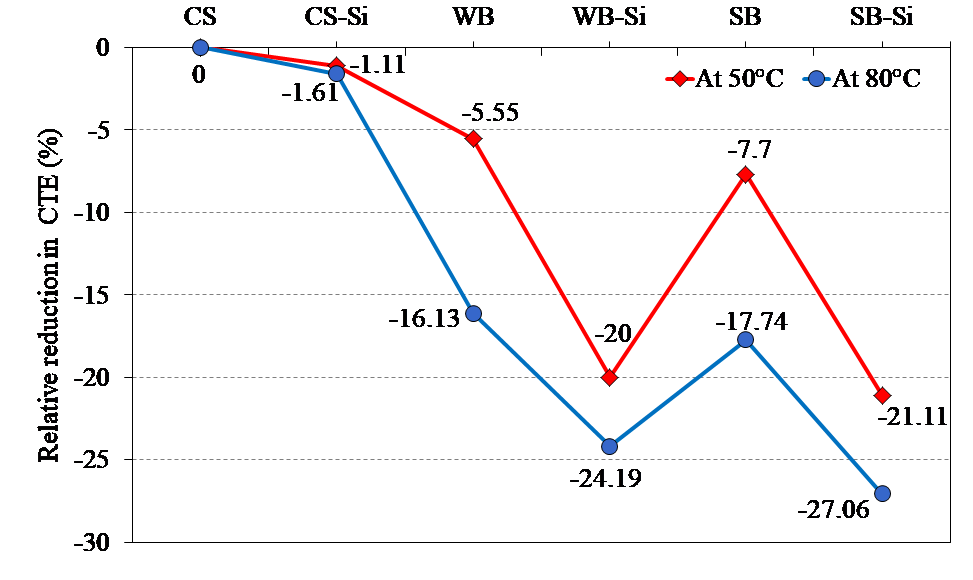
This study aims to provide a comprehensive evaluation of concrete repair interfaces, extending beyond traditional mechanical strength tests to assess key durability-related aspects. The influence of substrate surface preparation and polymer modification on bond continuity, thermal compatibility, and permeability is investigated. The methodology involves creating composite specimens with as-cast, wire-brushed, or sandblasted surfaces, and repairing them using both plain and polymer-modified mortars. The resulting interfaces are characterized using ultrasonic pulse velocity (UPV), coefficient of thermal expansion (CTE), and water permeability analysis. The results demonstrate that sandblasting with polymer modification yields superior performance. This approach leads to a 12.99% increase in UPV, achieving an “Excellent” bond classification. It also produces a 27.06% reduction in CTE at 80°C and a 76.1% decrease in the water permeability coefficient. The findings confirm that aggressive surface preparation enhances mechanical interlock, while polymer modification improves adhesion. Consequently, this combined approach is essential for durable, high-performance repairs.
References
S. Barbhuiya, A. Jivkov, and B. B. Das, “A Review of Multi-Scale Modelling of Concrete Deterioration: Fundamentals, Techniques and Perspectives,” Construction and Building Materials, vol. 406, article no. 133472, 2023.
P. Yuan, B. Zhang, Y. Yang, T. Jiang, J. Li, J. Qiu, et al., “Application of Polymer Cement Repair Mortar in Underground Engineering: A Review,” Case Studies in Construction Materials, vol. 19, article no. e02555, 2023.
A. Sadrmomtazi and R. K. Khoshkbijari, “Determination and Prediction of Bonding Strength of Polymer Modified Concrete (PMC) as the Repair Overlay on the Conventional Concrete Substrate,” KSCE Journal of Civil Engineering, vol. 23, no. 3, pp. 1141-1149, 2019.
X. Song, X. Song, H. Liu, H. Huang, K. G. Anvarovna, N. A. D. Ugli, et al., “Cement-Based Repair Materials and the Interface with Concrete Substrates: Characterization, Evaluation and Improvement,” Polymers, vol. 14, no. 7, article no. 1485, 2022.
A. El-Mir, M. Ghamlush, J. J. Assaad, A. El-Dieb, and H. El-Hassan, “Polymer-Modified Fiber-Reinforced Electrically Conductive Composites with Enhanced Bond Properties,” Buildings, vol. 16, no. 5, article no. 1074, 2026.
N. M. Altwair, Y. O. Yacoub, A. M. Alsharif, and L. S. Sryh, “Influence of Surface Roughness on Durability of New-Old Concrete Interface,” Advances in Technology Innovation, vol. 9, no. 2, pp. 143-155, 2024.
N. M. Altwair, Y. O. Yacoub, A. F. Aliwan, W. F. Alnaas, S. E. Abdulsalam, and A. M. Alsharif, “Quantifying the Influence of Surface Roughness on Concrete Overlay Bonding in Sulfuric Acid Environments,” Proceedings of Engineering and Technology Innovation, vol. 30, no. 1, pp. 1-15, 2025.
J. Zhou, Y. Dong, T. Qiu, J. Lv, P. Guo, and X. Liu, “The Microstructure and Modification of the Interfacial Transition Zone in Lightweight Aggregate Concrete: A Review,” Buildings, vol. 15, no. 15, article no. 2784, 2025.
G. Li, Q. Zhou, W. Wang, C. Lu, C. Chen, Z. Guo, et al., “Chloride Diffusion along the Interface between Concrete Matrix and Repair Materials under Flexural Loading,” Construction and Building Materials, vol. 372, article no. 130829, 2023.
Y. Ma, Y. Tian, T. Tian, and J. Huang, “Research on Ultrasonic Imaging of Defects in Insulating Materials Based on the SAFT,” Applied Sciences, vol. 16, no. 5, article no. 2400, 2026.
T. H. Panzera, A. L. Christoforo, F. P. Cota, P. H. R. Borges, and C. R. Bowen, “Ultrasonic Pulse Velocity Evaluation of Cementitious Materials,” in Advances in Composite Materials - Analysis of Natural and Man-Made Materials, P. Tešinova, Ed. Rijeka, Croatia: InTech, 2011, pp. 411-436.
A. Ortiz-Marqués, P. Caldevilla, E. Goldmann, M. Safuta, M. Fernández-Raga, and M. Górski, “Porosity and Permeability in Construction Materials as Key Parameters for Their Durability and Performance: A Review,” Buildings, vol. 15, no. 18, article no. 3422, 2025.
L. Reginato, R. G. G. Oliveira, and F. L. Willrich, “Coefficient of Thermal Expansion of Cementitious Mortars: New Testing Methodology,” Revista IBRACON de Estruturas e Materiais, vol. 18, no. 1, 2025.
A. Subedi, H. Kim, M.-S. Lee, and S.-J. Lee, “Thermal Behavior of Concrete: Understanding the Influence of Coefficient of Thermal Expansion of Concrete on Rigid Pavements,” Applied Sciences, vol. 15, no. 6, article no. 3213, 2025.
F. H. AlMosawi and M. A. Khalaf, “Feasibility of Using Ultrasonic Pulse Velocity to Measure the Bond between New and Old Concrete,” Journal of Engineering Sciences, vol. 26, no. 1, pp. 164-172, 2018.
A. S. Dermawan, S. M. Dewi, Wisnumurti, and A. Wibowo, “Performance Evaluation and Crack Repair in Building Infrastructure,” IOP Conference Series Earth and Environmental Science, vol. 328, no. 1, article no. 012007, 2019.
A. Kothari, M. Rajczakowska, and A. Cwirzen, “UHPC Overlay as Sustainable Solution to Preserve Old Concrete Structures,” MATEC Web of Conferences, vol. 364, article no. 04014, 2022.
J. Fan, L. Wu, and B. Zhang, “Influence of Old Concrete Age, Interface Roughness and Freeze-Thawing Attack on New-to-Old Concrete Structure,” Materials, vol. 14, no. 5, article no.1057, 2021.
P. Santos, E. Júlio, and J. Santos, “Towards the Development of an In Situ Non-Destructive Method to Control the Quality of Concrete-to-Concrete Interfaces,” Engineering Structures, vol. 32, no. 1, pp. 207-217, 2010.
M. F. Ashby and D. R. H. Jones, Engineering Materials 1: An Introduction to Properties, Applications and Design, 4th ed., Oxford, U.K.: Elsevier, 2012.
G. D. Alungbe, M. L. Tia, and D. G. Bloomquist, “Effects of Aggregate, Water/Cement Ratio, and Curing on the Coefficient of Linear Thermal Expansion of Concrete,” Transportation Research Record: Journal of the Transportation Research Board, no. 1335, pp. 44-51, 1992.
J. Xia, Y. Xi, and W.-L. Jin, “Temperature-Dependent Coefficient of Thermal Expansion of Concrete in Freezing Process,” Journal of Engineering Mechanics, vol. 143, no. 8, 2017.
M. A. Al-Osta, S. Ahmad, M. K. Al-Madani, H. R. Khalid, M. Al-Huri, and A. Al-Fakih, “Performance of Bond Strength between Ultra-High-Performance Concrete and Concrete Substrates (Concrete Screed and Self-Compacted Concrete): An Experimental Study,” Journal of Building Engineering, vol. 51, article no. 104291, 2022.
S. Ghabezloo, “Micromechanical Analysis of the Effect of Porosity on the Thermal Expansion Coefficient of Heterogeneous Porous Materials,” International Journal of Rock Mechanics and Mining Sciences, vol. 55, pp. 97-101, 2012.
A. M. Neville, Properties of Concrete, 5th ed., Harlow, U.K.: Pearson Education, 2011.
I. De La Varga, J. F. Muñoz, D. P. Bentz, R. P. Spragg, P. E. Stutzman, and B. A. Graybeal, “Grout-Concrete Interface Bond Performance: Effect of Interface Moisture on the Tensile Bond Strength and Grout Microstructure,” Construction and Building Materials, vol. 170, pp. 747-756, 2018.
Z. Ding, J. Wen, X. Li, and X. Yang, “Permeability of the Bonding Interface between Strain-Hardening Cementitious Composite and Normal Concrete,” AIP Advances, vol. 9, no. 5, 2019.
Published
Issue
Section
License
Copyright (c) 2026 Nurdeen Altwair, Muatamed Ben Taher, Mohammed Al-Noairi, Abduraoif Abuthina, Abdulmottaleb Bin Salim, Ali Abuzgaia, Mustafa Al-Tayeb

This work is licensed under a Creative Commons Attribution-NonCommercial 4.0 International License.
Submission of a manuscript implies: that the work described has not been published before that it is not under consideration for publication elsewhere; that if and when the manuscript is accepted for publication. Authors can retain copyright in their articles with no restrictions. is accepted for publication. Authors can retain copyright of their article with no restrictions.

Since Jan. 01, 2019, AITI will publish new articles with Creative Commons Attribution Non-Commercial License, under The Creative Commons Attribution Non-Commercial 4.0 International (CC BY-NC 4.0) License.
The Creative Commons Attribution Non-Commercial (CC-BY-NC) License permits use, distribution and reproduction in any medium, provided the original work is properly cited and is not used for commercial purposes.
How to Cite