Evaluating the Bond Performance of Conventional and Polymer-Modified Repair Mortars on Variously Prepared Concrete Substrates
DOI:
https://doi.org/10.46604/peti.2026.16265Keywords:
bond strength, concrete substrate, surface preparation, polymer-modified mortarAbstract
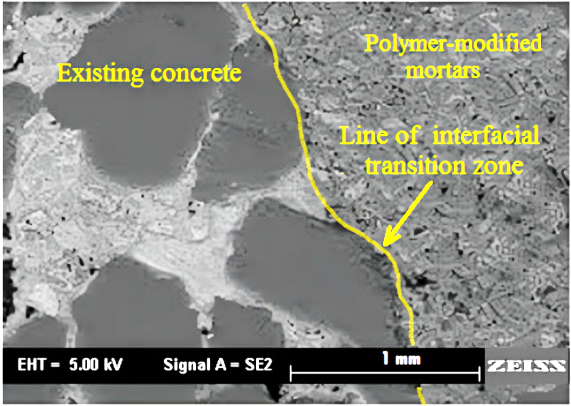
The long-term performance of repaired concrete structures depends fundamentally on the quality of their constituent materials and interfaces. This study aims to investigate the bond between existing concrete substrates and new repair materials. A systematic experimental program is conducted to evaluate the integrated bond performance of conventional and polymer-modified mortars applied to concrete substrates with three surface preparation conditions (as-cast, wire brushing, and sandblasting). The interfacial behavior is assessed under slant shear, indirect tensile, and four-point bending tests. The results demonstrate that mechanical surface preparation is the dominant factor governing interfacial bond efficiency, with sandblasting consistently providing the greatest improvement. In contrast, polymer modification has a negligible effect on slant shear capacity but profoundly improves flexural bond strength. Overall, sandblasting is essential for achieving durable structural joints, while polymer modification prevents bond failure under significant flexural or tensile stresses, ensuring structural longevity.
References
D. Daneshvar, A. Behnood, and A. Robisson, “Interfacial Bond in Concrete-to-Concrete Composites: A Review,” Construction and Building Materials, vol. 359, article no. 129195, 2022.
Z. Luo, T. Pan, R. Guo, R. Lin, C. Fu, Z. Zhang, et al., “Interfacial Bonding Behavior between ECC and Thermally Damaged Concrete: Role of Interface Agents and Surface Roughness,” Construction and Building Materials, vol. 493, article no. 143330, 2025.
H. Baloch, S. Grünewald, and S. Matthys, “Assessment of Shrinkage and Bond Behaviour of High Performance Cement-Based Composites as a Repair Mortar,” Developments in the Built Environment, vol. 15, article no. 100203, 2023.
N. M. Altwair, Y. O. Yacoub, A. M. Alsharif, and L. S. Sryh, “Influence of Surface Roughness on Durability of New-Old Concrete Interface,” Advances in Technology Innovation, vol. 9, no. 2, pp. 143-155, 2024.
M. A. Yazdi, E. Dejager, M. Debraekeleer, E. Gruyaert, K. Van Tittelboom, and N. De Belie, “Bond Strength between Concrete and Repair Mortar and Its Relation with Concrete Removal Techniques and Substrate Composition,” Construction and Building Materials, vol. 230, article no. 116900, 2019.
M. K. Al-Madani, M. A. Al-Osta, S. Ahmad, H. R. Khalid, and M. Al-Huri, “Interfacial Bond Behavior between Ultra High Performance Concrete and Normal Concrete Substrates,” Construction and Building Materials, vol. 320, article no. 126229, 2021.
M. A. Al-Osta, S. Ahmad, M. K. Al-Madani, H. R. Khalid, M. Al-Huri, and A. Al-Fakih, “Performance of Bond Strength between Ultra-High-Performance Concrete and Concrete Substrates (Concrete Screed and Self-Compacted Concrete): An Experimental Study,” Journal of Building Engineering, vol. 45, article no. 104291, 2022.
M. Kaur, H. Chawla, and N. Kwatra, “Effect of GO-Modified Epoxy on the Bond Behavior of Old-New Concrete and Comparison with Different Surface Preparation Techniques,” Construction and Building Materials, vol. 396, article no. 132369, 2023.
A. Y. Osman and M. R. Irshidat, “Bond Strength Development of Ambient-Cured Sustainable Geopolymer Mortar to Concrete Substrate,” Arabian Journal for Science and Engineering, vol. 51, no. 4, pp. 4993-5011, 2025.
S. Feng, H. Xiao, R. Zhang, and C. Yang, “Bond Performance between Substrate Concrete and Repair Mortar: Effect of Carbon Fibre and Expansive Agent,” Construction and Building Materials, vol. 250, article no. 118830, 2020.
M. George and D. Sathyan, “Influence of Self-Curing Agents and Sustainable Additives on Repair Mortar: A Two-Way ANOVA Approach,” Journal of Asian Architecture and Building Engineering, pp. 1-22, 2026.
D. Cheng, X. Li, X. Gao, X. Fan, R. Zhao, and T. Yang, “Influence of Polymer Latexes on the Properties of High Performance Cement–Based Materials,” Crystals, vol. 12, no. 6, article no. 789, 2022.
C. Shi, M. Li, C. Ma, and T. He, “Interfacial Bonding Properties of Styrene-Butadiene Rubber and Ethylene Vinyl Acetate Emulsion-Modified OPC–CAC–G Repair Mortar,” Construction and Building Materials, vol. 370, article no. 130747, 2023.
R. Wang and L. Zhang, “Mechanism and Durability of Repair Systems in Polymer-Modified Cement Mortars,” Advances in Materials Science and Engineering, vol. 2015, article no. 594672, pp. 1-8, 2015.
P. N. Ohja, P. Kaura, B. Singh, Y. N. Daniel, and N. Kumar, “Evaluation of Polymer Modified Mortar and Bonding Agent for Structural Repair,” Journal of Asian Concrete Federation, vol. 7, no. 2, pp. 56–62, 2021.
K. Momeni, N. I. Vatin, M. Hematibahar, and T. H. Gebre, “Repair Overlays of Modified Polymer Mortar Containing Glass Powder and Composite Fibers-Reinforced Slag: Mechanical Properties, Energy Absorption, and Adhesion to Substrate Concrete,” Frontiers in Built Environment, vol. 10, article no. 1479849, 2024.
P. I. Abdulrahman and D. K. Bzeni, “Bond Strength Evaluation of Polymer Modified Cement Mortar Incorporated with Polypropylene Fibers,” Case Studies in Construction Materials, vol. 17, article no. e01387, 2022.
R. A. Caesar, S. A. Kristiawan, and S. As’ad, “Effect of Acrylic Copolymer Addition and Interface Treatment on the Bond Strength of Polymer Modified Mortar and Concrete,” E3S Web of Conferences, vol. 429, article no. 05016, 2023.
K. T. Felekoglu, B. Felekoglu, A. S. Tasan, and B. Felekoglu, “Evaluating the Bond Strength between Concrete Substrate and Repair Mortars with Full-Factorial Analysis,” Computers and Concrete, vol. 12, no. 5, pp. 651-668, 2013.
Y. Zhang, P. Zhu, Z. Liao, and L. Wang, “Interfacial Bond Properties between Normal Strength Concrete Substrate and Ultra-High Performance Concrete as a Repair Material,” Construction and Building Materials, vol. 235, article no. 117431, 2019.
W. A. Megid and K. H. Khayat, “Effect of Structural Buildup at Rest of Self-Consolidating Concrete on Mechanical and Transport Properties of Multilayer Casting,” Construction and Building Materials, vol. 196, pp. 626-636, 2019.
D. K. Harris, M. A. C. Muñoz, A. Gheitasi, T. M. Ahlborn, and S. V. Rush, “The Challenges Related to Interface Bond Characterization of Ultra-High-Performance Concrete with Implications for Bridge Rehabilitation Practices,” Advances in Civil Engineering Materials, vol. 4, no. 2, pp. 75-101, 2015.
ACI Committee 546, “Guide to Materials Selection for Concrete Repair (ACI 546.3R-14),” American Concrete Institute, Farmington Hills, MI, 2014.
N. M. Altwair, Y. O. Yacoub, A. F. Aliwan, W. F. Alnaas, S. E. Abdulsalam, and A. M. Alsharif, “Quantifying the Influence of Surface Roughness on Concrete Overlay Bonding in Sulfuric Acid Environments,” Proceedings of Engineering and Technology Innovation, vol. 30, pp. 38-52, 2025.
M. M. Sprinkel and C. Ozyildirim, “Evaluation of High Performance Concrete Overlays Placed on Route 60 over Lynnhaven Inlet in Virginia,” Federal Highway Administration, Technical Report FHWA-RC-99-007, 1999.
A. Momayez, M. R. Ehsani, A. A. Ramezanianpour, and H. Rajaie, “Comparison of Methods for Evaluating Bond Strength between Concrete Substrate and Repair Materials,” Cement and Concrete Research, vol. 35, no. 4, pp. 748-757, 2005.
B. A. Tayeh, B. H. A. Bakar, M. A. M. Johari, and Y. L. Voo, “Mechanical and Permeability Properties of the Interface between Normal Concrete Substrate and Ultra High Performance Fiber Concrete Overlay,” Construction and Building Materials, vol. 36, pp. 538-548, 2012.
A. I. B. Farouk and S. I. Haruna, “Evaluation of Bond Strength between Ultra-High-Performance Concrete and Normal Strength Concrete: An Overview,” Jurnal Kejuruteraan, vol. 32, no. 3, pp. 397-407, 2020.
A. Oktavia, A. Y. Pratiwi, and N. Chairunnisa, “Performance of Concrete-to-Concrete Bond Strength in Wetland Area,” E3S Web of Conferences, vol. 476, article no. 01062, 2024.
S. Feng, H. Xiao, and J. Geng, “Bond Strength between Concrete Substrate and Repair Mortar: Effect of Fibre Stiffness and Substrate Surface Roughness,” Cement and Concrete Composites, vol. 114, article no. 103746, 2020.
Downloads
Published
Issue
Section
License
Copyright (c) 2026 Nurdeen Altwair, Muatamed Ben Taher, Ali Abuzgaia, Mohammed Al-Noairi, Bdulmottaleb Bin Salim, Abduraouf Abuthina, Mustafa Al-Tayeb

This work is licensed under a Creative Commons Attribution-NonCommercial 4.0 International License.
Submission of a manuscript implies: that the work described has not been published before that it is not under consideration for publication elsewhere; that if and when the manuscript is accepted for publication. Authors can retain copyright of their article with no restrictions. Also, author can post the final, peer-reviewed manuscript version (postprint) to any repository or website.

Since Oct. 01, 2015, PETI will publish new articles with Creative Commons Attribution Non-Commercial License, under The Creative Commons Attribution Non-Commercial 4.0 International (CC BY-NC 4.0) License.
The Creative Commons Attribution Non-Commercial (CC-BY-NC) License permits use, distribution and reproduction in any medium, provided the original work is properly cited and is not used for commercial purposes
How to Cite