Machining Quality Prediction in Stainless Steel Side Milling Using Neural Networks
DOI:
https://doi.org/10.46604/ijeti.2026.16217Keywords:
SUS304 stainless steel, in-process quality prediction, neural networks, sensory tool holderAbstract
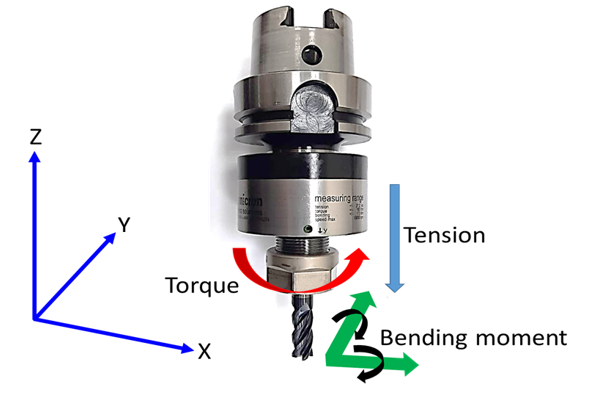
This study proposes a novel neural network-based framework to predict machining quality during the side milling of SUS304 stainless steel. As a holistic deep neural network (DNN) framework bridging real-time sensory cutting forces to dual quality metrics—dimensional accuracy and surface roughness—this research addresses a critical gap in SUS304 intelligent machining. A sensory tool holder acquires cutting force signals while an automated in-process system measures machining outcomes. DNN and convolutional neural network (CNN) models are trained using frequency-domain features. Results indicate that the DNN achieves superior robustness, with an average root mean square error (RMSE) of 0.0194 mm for dimensional accuracy and 0.3950 µm for surface roughness. Statistical validation via the mann-whitney u test (p < 0.005) confirms that the DNN more effectively captures global nonlinear relationships within spectral features. This research validates a reliable, high-precision framework for in-process quality prediction, supporting adaptive control in difficult-to-machine materials.
References
W. T. Chien and C. Y. Chou, “The Predictive Model for Machinability of 304 Stainless Steel,” Journal of Materials Processing Technology, vol. 118, no. 1-3, pp. 442-447, 2001.
M. H. Tsai, J. N. Lee, H. D. Tsai, M. J. Shie, T. L. Hsu, and H. S. Chen, “Applying a Neural Network to Predict Surface Roughness and Machining Accuracy in the Milling of SUS304,” Electronics, vol. 12, no. 4, article no. 981, 2023.
C. Wang, Y. Li, F. Gao, K. Wu, K. Yin, P. He, et al., “Milling-Force Prediction Model for 304 Stainless Steel Considering Tool Wear,” Machines, vol. 13, no. 1, article no. 72, 2025.
A. Schuster, A. Otto, H. Rentzsch, and S. Ihlenfeldt, “Multi-Sensory Tool Holder for Process Force Monitoring and Chatter Detection in Milling,” Sensors, vol. 24, no. 17, article no. 5542, 2024.
T. Souflas, E. Triantopoulou, C. Papaioannou, C. Ramsauer, J. A. Greitler, P. Schörghofer, et al., “Tool Condition Monitoring in Milling Using Cutting Force and Temperature Data from an Instrumented Milling Head,” The International Journal of Advanced Manufacturing Technology, vol. 139, pp. 6049-6072, 2025.
G. K. Ojha, G. K. Yadav, and P. K. Yadav, “Optimization Technique for Surface Roughness Prediction in Turning Operation,” SAMRIDDHI A Journal of Physical Sciences, Engineering and Technology, vol. 6, no. 2, pp. 117-124, 2015.
P. B. Huang, “An Intelligent Neural-Fuzzy Model for an In-Process Surface Roughness Monitoring System in End Milling Operations,” Journal of Intelligent Manufacturing, vol. 27, no. 3, pp. 689-700, 2016.
Z. Lu, M. Wang, and W. Dai, “Machined Surface Quality Monitoring Using a Wireless Sensory Tool Holder in the Machining Process,” Sensors, vol. 19, no. 8, article no. 1847, 2019.
Y. W. Chen, Y. F. Huang, K. T. Wu, and H. H. Lee, “Cutting Force Validation and Volumetric Errors Compensation of Thin Workpieces with Sensory Tool Holder,” The International Journal of Advanced Manufacturing Technology, vol. 108, no. 1-2, pp. 299-312, 2020.
L. Nowakowski, M. Bartoszuk, M. Skrzyniarz, S. Blasiak, and D. Vasileva, “Influence of the Milling Conditions of Aluminium Alloy 2017A on the Surface Roughness,” Materials, vol. 15, no. 10, article no. 3626, 2022.
M. H. Tsai, J. N. Lee, M. J. Shie, and M. H. Deng, “Intelligent Performance Prediction of Flank Milling of Ti6Al4V Using Sensory Tool Holder,” Sensors and Materials, vol. 34, no. 8, pp. 3241-3253, 2022.
P. Krishnakumar, K. Rameshkumar, and K. I. Ramachandran, “Tool Wear Condition Prediction Using Vibration Signals in High Speed Machining (HSM) of Titanium (Ti-6Al-4V) Alloy,” Procedia Computer Science, vol. 50, pp. 270-275, 2015.
Z. Huang, J. Zhu, J. Lei, X. Li, and F. Tian, “Tool Wear Predicting Based on Multi-Domain Feature Fusion by Deep Convolutional Neural Network in Milling Operations,” Journal of Intelligent Manufacturing, vol. 31, no. 4, pp. 953-966, 2020.
T. Pan, J. Zhang, X. Zhang, W. Zhao, H. Zhang, and B. Lu, “Milling Force Coefficients-Based Tool Wear Monitoring for Variable Parameter Milling,” The International Journal of Advanced Manufacturing Technology, vol. 120, pp. 4565-4580, 2022.
Y. W. Chan, T. C. Kang, C. T. Yang, C. H. Chang, S. M. Huang, and Y. T. Tsai, “Tool Wear Prediction Using Convolutional Bidirectional LSTM Networks,” The Journal of Supercomputing, vol. 78, no. 1, pp. 810-832, 2022.
F. C. Zegarra, J. Vargas-Machuca, and A. M. Coronado, “A Comparative Study of CNN, LSTM, BILSTM, and GRU Architectures for Tool Wear Prediction in Milling Processes,” Journal of Machine Engineering, vol. 23, no. 4, pp. 122-136, 2023.
J. Kurek, E. Świderska, and K. Szymanowski, “Tool Wear Classification in Chipboard Milling Processes Using 1-D CNN and LSTM Based on Sequential Features,” Applied Sciences, vol. 14, no. 11, article no. 4730, 2024.
M. Huang, X. Xie, W. Sun, and Y. Li, “Tool Wear Prediction Model Using Multi-Channel 1D Convolutional Neural Network and Temporal Convolutional Network,” Lubricants, vol. 12, no. 2, article no. 36, 2024.
I. Zagórski, M. Kulisz, and A. Semeniuk, “Artificial Neural Network Modelling of Cutting Force Components in Milling,” ITM Web of Conferences, vol. 15, article no. 02001, 2017.
S. Gao, X. Duan, K. Zhu, and Y. Zhang, “Generic Cutting Force Modeling with Comprehensively Considering Tool Edge Radius, Tool Flank Wear and Tool Runout in Micro-End Milling,” Micromachines, vol. 13, no. 11, article no. 1805, 2022.
Published
Issue
Section
License
Copyright (c) 2026 Ming-Hsu Tsai, Jeng-Nan Lee, Teng-Hui Chen, Tai-Lin Hsu, Dong-Ke Huang

This work is licensed under a Creative Commons Attribution-NonCommercial 4.0 International License.
Copyright Notice
Submission of a manuscript implies: that the work described has not been published before that it is not under consideration for publication elsewhere; that if and when the manuscript is accepted for publication. Authors can retain copyright in their articles with no restrictions. Also, author can post the final, peer-reviewed manuscript version (postprint) to any repository or website.

Since Jan. 01, 2019, IJETI will publish new articles with Creative Commons Attribution Non-Commercial License, under Creative Commons Attribution Non-Commercial 4.0 International (CC BY-NC 4.0) License.
The Creative Commons Attribution Non-Commercial (CC-BY-NC) License permits use, distribution and reproduction in any medium, provided the original work is properly cited and is not used for commercial purposes.
How to Cite





.jpg)