
Intelligent Poultry Health Recognition Using an Improved YOLOv8
DOI:
https://doi.org/10.46604/ijeti.2026.16307Keywords:
poultry health, YOLOv8, data augmentation, object detection, abnormal postureAbstract
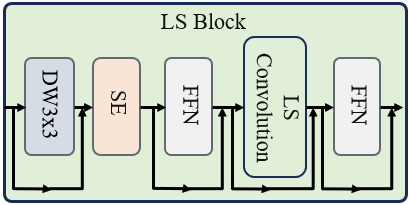
Intelligent poultry health recognition is crucial in precision livestock farming. Nevertheless, existing methods suffer from limited precision and practicality due to complex backgrounds and small detection targets. This study aims to develop an improved YOLOv8-based poultry health recognition model to enhance detection precision and robustness in real poultry farming environments. In this study, YOLOv8 is improved at both the data and network levels. At the data level, multi-strategy data augmentation is applied. At the network level, the neck network of YOLOv8 is reconstructed by integrating the large-small (LS) block to enhance multi-scale feature fusion capabilities. Experimental results indicate that both improvement levels increase precision by 4.4% and 4.5%, respectively. Moreover, the model achieves overall improvements of 5.4% in precision and 9.9% in mAP@0.5:0.95 compared with the original YOLOv8 algorithm. In this study, the developed model effectively improves poultry health recognition performance and demonstrates practical value for practical poultry farming applications.
References
B. Paneru, A. Dhungana, S. Dahal, and L. Chai, “Artificial Intelligence in Precision Poultry Farming: Opportunities, Challenges, and Future Features,” Animal Frontiers, article no. vfag004, 2026.
M. H. Natsir, W. F. Mahmudy, M. Tono, and Y. F. Nuningtyas, “Advancements in Artificial Intelligence and Machine Learning for Poultry Farming: Applications, Challenges, and Future Prospects,” Smart Agricultural Technology, vol. 12, article no. 101307, 2025.
W. Fan, H. Peng, and D. Yang, “Review: The Application and Challenges of Advanced Detection Technologies in Poultry Farming,” Poultry Science, vol. 104, no. 11, article no. 105870, 2025.
Y. Liu, M. G. M. Johar, A. I. Hajamydeen, and L. Raya, “Intelligent Poultry Health Management Based on Improved YOLOv8 Algorithm,” Proceedings of IEEE International Conference on Agrosystem Engineering, Technology & Applications, IEEE Press, pp. 179-186, 2024.
X. Qin, C. Lai, Z. Pan, M. Pan, Y. Xiang, and Y. Wang, “Recognition of Abnormal-Laying Hens Based on Fast Continuous Wavelet and Deep Learning Using Hyperspectral Images,” Sensors, vol. 23, no. 7, article no. 3645, 2023.
C. Losacco, G. Pugliese, L. Forte, V. Tufarelli, A. Maggiolino, and P. De Palo, “Digital Transition as a Driver for Sustainable Tailor-Made Farm Management: An Up-to-Date Overview on Precision Livestock Farming,” Agriculture, vol. 15, no. 13, article no. 1383, 2025.
S. Solak, B. Cetin, and M. H. B. Ucar, “Real-Time Theft Detection in Urban Surveillance: A Comparative Analysis of YOLO-Based Approach,” Journal of Engineering Research, in press.
L. Li, M. Di, H. Xue, Z. Zhou, and Z. Wang, “Feature Selection Model Based on IWOA for Behavior Identification of Chicken,” Sensors, vol. 22, no. 16, article no. 6147, 2022.
N. Volkmann, C. Zelenka, A. M. Devaraju, J. Brünger, J. Stracke, B. Spindler, et al., “Keypoint Detection for Injury Identification During Turkey Husbandry Using Neural Networks,” Sensors, vol. 22, no. 14, article no. 5188, 2022.
A. Kaur, S. Singh, H. Singh, S. Bharti, J. Sharma, and H. Sharma, “A Hybrid Approach Combining Deep CNN Features with Classical Machine Learning for Diabetic Retinopathy Diagnosis,” International Journal of Advanced Computer Science and Applications, vol. 16, no. 8, 2025.
H. H. Luong and T. M. Nguyen, “Improving Chicken Disease Classification Based on Vision Transformer and Combine with Integrated Gradients Explanation,” International Journal of Advanced Computer Science and Applications, vol. 15, no. 4, 2024.
A. M. Mohialdin, A. M. Elbarrany, and A. Atia, “Chicken Behavior Analysis for Surveillance in Poultry Farms,” International Journal of Advanced Computer Science and Applications, vol. 14, no. 3, 2023.
F. Wang, J. Cui, Y. Xiong, and H. Lu, “Application of Deep Learning Methods in Behavior Recognition of Laying Hens,” Frontiers in Physics, vol. 11, article no. 1139976, 2023.
B. K. Depuru, S. Putsala, and P. Mishra, “Automating Poultry Farm Management With Artificial Intelligence: Real-Time Detection and Tracking of Broiler Chickens for Enhanced and Efficient Health Monitoring,” Tropical Animal Health and Production, vol. 56, no. 2, article no. 75, 2024.
P. Wang, P. Wu, C. Wang, X. Huang, L. Wang, C. Li, et al., “Chicken Body Temperature Monitoring Method in Complex Environment Based on Multi-Source Image Fusion and Deep Learning,” Computers and Electronics in Agriculture, vol. 228, article no. 109689, 2025.
S. Dahal, B. Paneru, A. Dhungana, and L. Chai, “Deep Learning and Thermal Imaging Approaches for the Assessment of Feather Coverage in Cage-Free Laying Hens,” AgriEngineering, vol. 8, no. 2, article no. 68, 2026.
F. A. A. Laleye and M. A. Mousse, “Attention-Based Recurrent Neural Network for Automatic Behavior Laying Hen Recognition,” Multimedia Tools and Applications, vol. 83, no. 22, pp. 62443-62458, 2024.
A. Mao, C. S. E. Giraudet, K. Liu, I. D. A. Nolasco, Z. Xie, Z. Xie, et al., “Automated Identification of Chicken Distress Vocalizations Using Deep Learning Models,” Journal of the Royal Society Interface, vol. 19, no. 191, article no. 20210921, 2022.
W. Tao, G. Wang, Z. Sun, S. Xiao, Q. Wu, and M. Zhang, “Recognition Method for Broiler Sound Signals Based on Multi-Domain Sound Features and Classification Model,” Sensors, vol. 22, no. 20, article no. 7935, 2022.
R. Srinivasagan, M. S. El Sayed, M. I. Al-Rasheed, and A. S. Alzahrani, “Edge Intelligence for Poultry Welfare: Utilizing Tiny Machine Learning Neural Network Processors for Vocalization Analysis,” PLOS ONE, vol. 20, no. 1, article no. e0316920, 2025.
F. Sattar, “Detection of Respiratory Diseases Based on Poultry Vocalizations Using Deep Learning,” Biology and Life Sciences Forum, vol. 54, no. 1, article no. 18, 2025.
X. Lin, W. Zhu, L. Liu, and Z. Zhou, “Decoding Laying Hen Behavior and Physiological Status through Acoustic Biomarkers: Temporal Patterns, Rooster-Hen Vocalization Identification in Group Housing and Environmental Adaptation,” Poultry Science, vol. 104, no. 11, article no. 105697, 2025.
M. Zhou, J. Zhu, Z. Cui, H. Wang, and X. Sun, “Detection of Abnormal Chicken Droppings Based on Improved Faster R-CNN,” International Journal of Agricultural and Biological Engineering, vol. 16, no. 1, pp. 243-249, 2023.
S. A. Sakib, M. M. H. Misat, T. R. Akanto, J. Islam, and F. A. Antara, “IoT Enabled Smart Poultry Farming System With Deep Learning for Chicken Health Detection in Real‐Time,” Journal of Sensors, vol. 2026, no. 1, article no. 1433795, 2026.
W. Qin, X. Yang, Y. Wang, Y. Wei, Y. Zhou, and W. Zheng, “YOLOPoul: Performance Evaluation of a Novel YOLO Object Detectors Benchmark for Multi-Class Manure Identification to Warn about Poultry Digestive Diseases,” Smart Agricultural Technology, vol. 12, article no. 101145, 2025.
D. Garg and N. Goel, “LameDetect: A Hybrid YOLO and CNN Model for Early Lameness Detection in Poultry Chickens,” Computers and Electronics in Agriculture, vol. 240, article no. 111239, 2026.
A. M. Elbarrany, A. Mohialdin, and A. Atia, “Abnormal Behavior Analysis for Surveillance in Poultry Farms Using Deep Learning,” Proceedings of 2023 Intelligent Methods, Systems, and Applications (IMSA), IEEE Press, pp. 56-61, 2023.
R. Bumbálek, S. N. Umurungi, J. de Dieu Marcel Ufitikirezi, T. Zoubek, R. Kuneš, R. Stehlík, et al., “Deep Learning in Poultry Farming: Comparative Analysis of Yolov8, Yolov9, Yolov10, and Yolov11 for Dead Chickens Detection,” Poultry Science, vol. 104, no. 9, article no. 105440, 2025.
P. Risma, T. Prasetyo, and Y. M. Armi, “YOLOv9-Assisted Vision System for Health Assessment in Poultry Using Deep Neural Networks,” Kinetik: Game Technology, Information System, Computer Network, Computing, Electronics, and Control, vol. 11, no. 1, pp. 63-72, 2026.
Published
Issue
Section
License
Copyright (c) 2026 Yajie Liu, Zhi Liu, Qingxun Meng, Yuxi Huang, Md Gapar Md Johar

This work is licensed under a Creative Commons Attribution-NonCommercial 4.0 International License.
Copyright Notice
Submission of a manuscript implies: that the work described has not been published before that it is not under consideration for publication elsewhere; that if and when the manuscript is accepted for publication. Authors can retain copyright in their articles with no restrictions. Also, author can post the final, peer-reviewed manuscript version (postprint) to any repository or website.

Since Jan. 01, 2019, IJETI will publish new articles with Creative Commons Attribution Non-Commercial License, under Creative Commons Attribution Non-Commercial 4.0 International (CC BY-NC 4.0) License.
The Creative Commons Attribution Non-Commercial (CC-BY-NC) License permits use, distribution and reproduction in any medium, provided the original work is properly cited and is not used for commercial purposes.
How to Cite





.jpg)